

How To Make A Phone Os
How To Design a Mobile Os
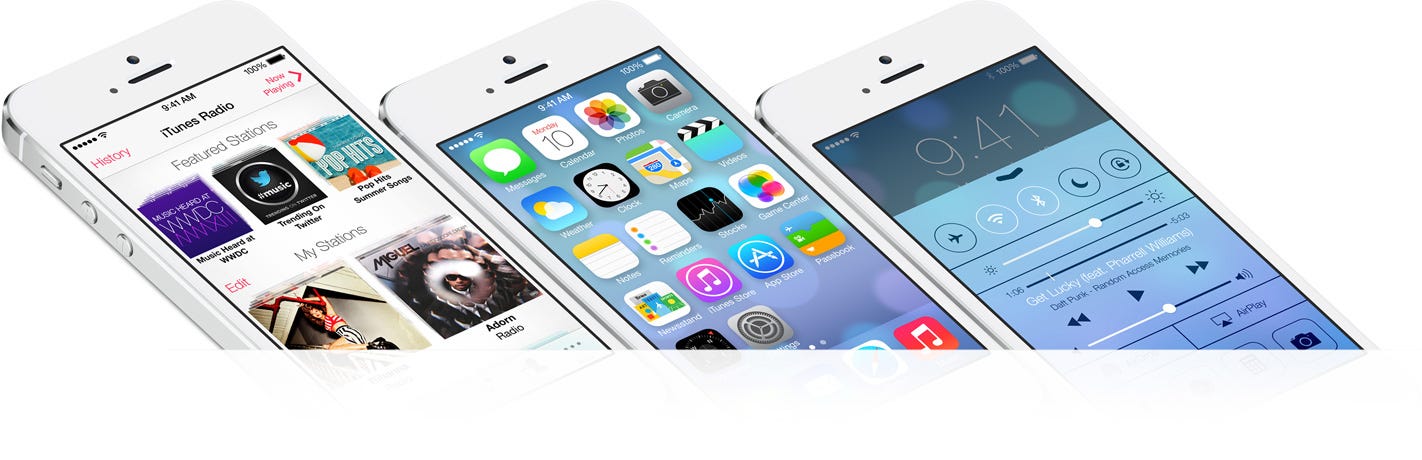
This week we a saw a new version of iOS, one the earth's almost successful mobile operating systems. When the original iPhone came out, the Bone in some ways was low-cal years ahead of other phones.
Simply we are only 5 years into the smartphone world and there many many things for usa to learn still. Both Android and iOS are non the concluding give-and-take in mobile operating system design.
1. Get out of the users way.
At it's core an operating organization'southward purpose to help users get something done. Whether its to make a phone call, connect to friends or get the latest news, how quickly and easily a user can attain a task is the number 1 goal.
A unproblematic metric, taps to completion is a skillful rule of thumb.
For example on iOS, to make a new phone call.
- Tap ane - Tap The Home Button
- Tap 2 - Tap The Phone App Icon
- Tap 3 - Tap The Keypad Button
- Tap four - Enter the number
- Tap 5 - Tap the Call Button
5 Taps to Completion
Compare this to older dumb phones
- Tap 1 - Tap the Green Telephone call Button
- Tap 2 - Enter your number
ii Taps to Completion
Granted maybe some people are making less telephone calls these days only I nonetheless use my phone every bit a phone all the time. What if mobile phones had a quick action push? Ane that the user could specify to always do the same thing, whether launch the phone dialer or take a picture show or text someone?
2. Provide Joy
We live and sleep with our phones these days. Something that is so close to usa needs to provide joy and delight in our lives. It'due south not just a matter of getting things done, simply getting things done with a smile.
Animation, sound and visuals are a great way to provide joy. When you first see the great animations bringing to life the experience of your phone, information technology provides a man touch on to another wise common cold and lifeless device. Humans move, jiff, play music. Nosotros are alive with emotion and answer in kind.
A simple metric, smiles per interaction is a good dominion of thumb.
That is to say, for every interaction (calling someone, changing apps, responding to messages), how many times does the user smile? Granted the smile most often only happens the first time, but I still smile every time I motion picture a business card with CardFlick.
This maybe a harder metric to measure or design for, it'southward one of those you know it when you see information technology/feel it kind of things, but that's what the emotional office of Human Figurer Interaction is about.
Information technology'due south how our devices relate to and create experiences for u.s. as humans that affair.
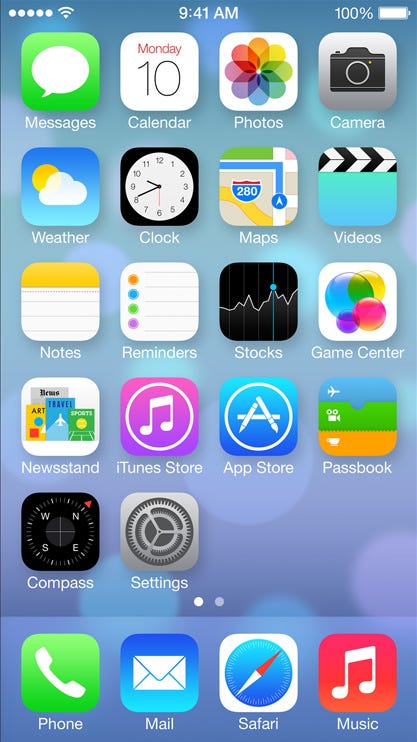
When a user beginning opens your app or your Os are they smiling? Does the dwelling house screen experience immediately radiate quality and joy?
3. Go on My Context
Phones are also unique in that they are nearly e'er not the focus of your attention. We are walking with them, waiting for the bus with them, hopefully not simply still happens driving with them. Keeping the user'southward location and navigation options clear at all times is primal for a great user experience.
A practiced metric is steps to habitation and back.
That is how many deportment must a user do to get to a neutral land and and then return dorsum to the task at hand.
On iOS
- Tap 1 - Tap the home push
Gets us home. Awesome.
- Tap 2 - Click the app I was on if on home screen.
One time again awesome because most apps remember where you lot were.
Or
- Tap ii - Double Tap Domicile Button to bring up running apps.
- Tap 3 - Click the app I was just in.
Actually great when it comes to going dwelling house, but I think there are ways to improve returning to the last app used.
What if a single tap on the home push brought you home and a double tap returned yous to the last app?
iv. Be Consistent
There's a reason most door handles are in the same place. It makes it very easy to empathise how to open a door. Compare that to swinging doors that take push or pull written on them, how much man free energy is wasted on figuring that out and bumping into glass?
The same thing applies for user interfaces. Consistency breeds usability. The same kind of deportment in the aforementioned kinds of places. The same font and button styles used to point similar actions.
A adept metric for this is number of styles per screen.
For example the wonderfully useful control center in iOS seven has at to the lowest degree iv different kinds of buttons.
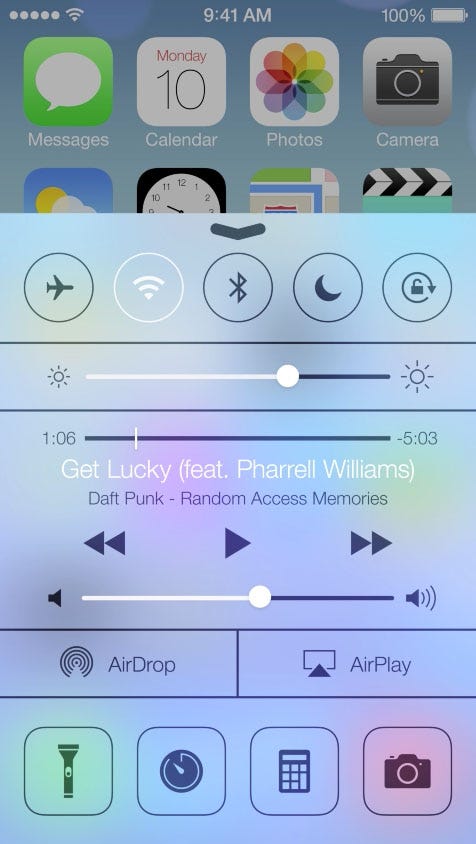
- Circular Toggle buttons for airplane way, wifi, bluetooth etc.
- Rectangular Action buttons for AirDrop and AirPlay
- Square Toggle buttons for flashlight, camera, calculator etc
- Icon Action buttons for play/pause without borders.
five. Pattern for Multiple Users and Multiple Places
We utilize our phones on the subway in darkness, at the park in bright light, in our cars where nosotros tin't see them. Some of us have older eyes with color vision issues, and some of u.s.a. are precipitous as a tack. The design of a mobile Os should encompass all these kinds of users.
I of the key ways to do this is provide contrast.
Elements that don't expect like if they have different functions or have typographic contrast make usage much more clearer. Buttons that feel interactable whether with outlines or shadows or other visual focusing tricks really aid. Font choices that make use of boldness, size and placement can pb visual heirarchy to make UIs more understandable.
A groovy style to test this out is the squint test. Wait at your UI and squint your optics, are the actionable elements still obvious?
6. Grow with me
As we go more and more comfortable with touch screen interactions, the general populace is able to sympathise practise more advanced interactions. Where compression and zoom was magical and new a few years ago, it'due south at present standard. Many apps before iOS 7 used a left swipe to go dorsum to previous screens and now it'south built into the Os.
The lock screen on many mobile operating systems is simply a agglomeration of stickers. Not actionable or engaging. And while a behemothic clock on the face is very useful, I think nosotros tin can also remember of other things that can be useful on the lock screen. Actionable notifications, final unread message or phone call, heck even showing the terminal good photo I took. Modify over fourth dimension, static is irksome.
Both iOS and Android have amazing app stores where much futurity functionality can be added in. Just I think we are a betoken now where the default experience has much further to get before we can consider it revolutionary.
Source: https://medium.com/@kidbombay/how-to-design-a-mobile-os-59af233b0ebc
0 Response to "How To Make A Phone Os"
Post a Comment